A Displaced Home : Into You I See

Diagram and Notes (Preliminary Analysis)
In a displaced home is where I found myself, during my migration into different cities, townships and rural areas in South Africa, which I called home in the past six years, an exploration of languages, people, food, lifestyle and environment. This continuous collection of photographs is presented in the form of images depicting; places, people and animals I have encountered in my questioning. I continue to question the issue of boarders and the diversity we lack to see from not being able to travel to the rest of Africa, I recollected my trauma of having to move from place to place, and house to house. Between the approach of the photographic digital collage by taking into account the national and continental context with a ray of factors, such as immigration, refugee/asylum seekers, climate change, environmental factors, and all that is inherent in diversity of being an African. I formed and continue to form an identity that informs me as well as the “outsider” of the core values of being an African thus the artwork showcases a sense of community, hard work, the diversity of thought and the love for our natural resources. Further to acknowledging daily that “Mother Earth” does not need us as human beings. In fact, we continue to see and learn with or without reason that history repeats itself. For one world replaces another as a means of rectifying the natural order. As we continue to disgrace natural resources such as coal which has kept us warm and mining magnets wealthy for years to date. Therefore, to truly showcase a Displaced Home it is through the one who “see’s”. As I felt being kicked out of home, a sense of displacement from home where by I had to move around after the Covid-19 lockdown looking for work. The migration due to financial constraints placed me in areas or situations that showed me where I am really from. The movement was so vast I travelled South Africa and felt that I travelled parts of Africa in three years. I saw different fauna and flora, rivers, mountains and animals. Moreover, through the artwork I seek to answer the question indirectly by the viewer diving into the question to see where I am from not just a place, but rather to see a people, a continent and a love for where I am from through images. Moreover, I seek to create a publication now of these stories in collective history and memory, as this will help shape my ideas of coloniality as a representation of continuous oppression and not be visually or reasoned with nuances of propaganda. My interest in capturing my world began through writing my thoughts and eventually I began to explore my curiosity about how black lives are captured through time. I contribute to South African black history to awaken advocacy, primarily to give life to black bodies and through capturing lyrical connotations, which contribute to black authentic vocal and instrumental arrangements created in storytelling for archival purposes. Telling and celebrating black lives and lived experiences are central to my work. By telling stories that people do not feel deserve being centered, I want to bring voice to curate discourse and to inform through capturing history as it occurs. I create to unburden black people and release the shackles of black being seen synonymous with oppression, to humanize the black body, and to see the black body in juxtaposition with its greatness. My photography or curation can be described as making people think further than just an image, to question, dismantle the status quo and to do better within the complexities of a South African past that has not gone for healing. I want to contribute to a legacy of black excellence in the photography archival space. I explore Shades of a Woman with a mission to give others a taste of what goes on in my mind and to inspire others to do the same. As a lover of survival stories, art, music, through appreciating what makes people talk and dance in rebellion. My work showcases movement through the different mediums of communication, from the political to the personal. In my work as a photographer, I write to photograph and I photograph to write black existence in to the world.

Ideas that grounded a Displaced Home
Coloniality of knowledge and being
If decoloniality is to deconstruct coloniality, in my work it is important to illustrate and narrate the manner in reality of truth through lived experiences in South Africa. By seeking and finding modes of healing and emancipation. Therefore, bearing in mind that coloniality through knowledge furthers colonial structures in existence today. Due to a created history of a Bantu by his or her oppressor, the Bantu not given room to explore or express without the master in mind and approval. On the other hand, in need of his or her masters’ tools, resources which offer a painful space because a Bantu must create Lastly, it is also noteworthy to express the divide between the literate and illiterate in conjunction with the digital divide in South African media society and the public sphere. Further subjugated by privilege of language, education and mainstream media messages conveyed in mostly English. By looking at local languages there is critique and development needed in expressing xenophobic attacks as Afrophobia, as a critical viewpoint in how South Africans “Black” priorities in their lived experiences in dissemination of information in local languages and community engagements of their contexts when speaking about xenophobia. As it is not “white” foreign nationals that are being attacked but rather “black” foreign nationals in local communities are being displaced and mistreated.

Into You I See
Through the project of a Displaced Home, Into You I see. I wish to promote diverse meanings in addressing South African challenges, concerns and opportunities together with appraisals of development in communities towards critical discourse or engagement with understanding and hearing different backgrounds towards solutions towards solidarity as South African in Africa by looking at the theme of Home.
Into You I See is a continuous research exploration through imagery story telling into a multimedia project, by use of images, collage and music.
Displaced Home: Into You I See; in questioning I ponder on:
• Where do images feed into a consumer society?
• What kind of image can evade becoming propaganda?”
• Interrogating the answer to; where I am really from?

Through reason we can never tell exactly where the truth begins and ends unless it is self-explored and or experience for logic to occur. To know a person to truly and really know where they are thinking or formulated in an image is through theory lens. Thus, the multimedia project speaks to this very idea of knowing as the subject matter in my project because the global hegemony creates a world unity with different traces of style, food, fashion and culture. Thus, with the different formats and mediums I have used, a publication is what I seek to do. Perhaps, of all themed works into one publication or different series, outlining or separating the personal from the public persona.
Where is Home?
Home is where the heart is

This question kept on pondering upon me, as the image that existed for a Displaced Home was a home built on wetlands in the middle of nowhere with no pathway to go in or out. Then again this image I found, I started looking into me, and what do I see or feel. And to be truly vulnerable I have to outline that as a lived experience by me and therefore maybe similar or may differ from those around me. At the end of this publication I should have decided if it is the personal narrative I want to tell or the public stories of communities in a situations and or status of being displaced in their home.


Diagraming has shaped the way I viewed and read my work, I feel like I just started all over again, it felt like I un-puzzled a completed piece and scrambled all the pieces again. Although, it has been an interesting interrogation of self and the work, I’ve also questioned the importance of the work, if it is relevant or not in a world that has slogans such as; Black Lives Matter, and global terror of migration, xenophobia, refugees, Gender based Violence, Trafficking of children, and the influencer revolution of artists’ works being compared to followers or likes. In turn, I am enjoying the unraveling and re-aligning the work to reach others into the complexities of Home, Being and Living/Survival.
Unpacking
A Displaced Home: Into You I See, explores how the economic fallout of COVID-19 turned the idea of "home" into something uncertain. After financial hardship left me homeless during lockdown, I moved between friends' homes, documenting the quiet realities of people surviving behind balconies, windows, and township streets before returning to my childhood home in Daveyton, where I witnessed both profound loss and remarkable resilience. Through photography and personal reflection, this story asks what "home" means when the economy displaces you.
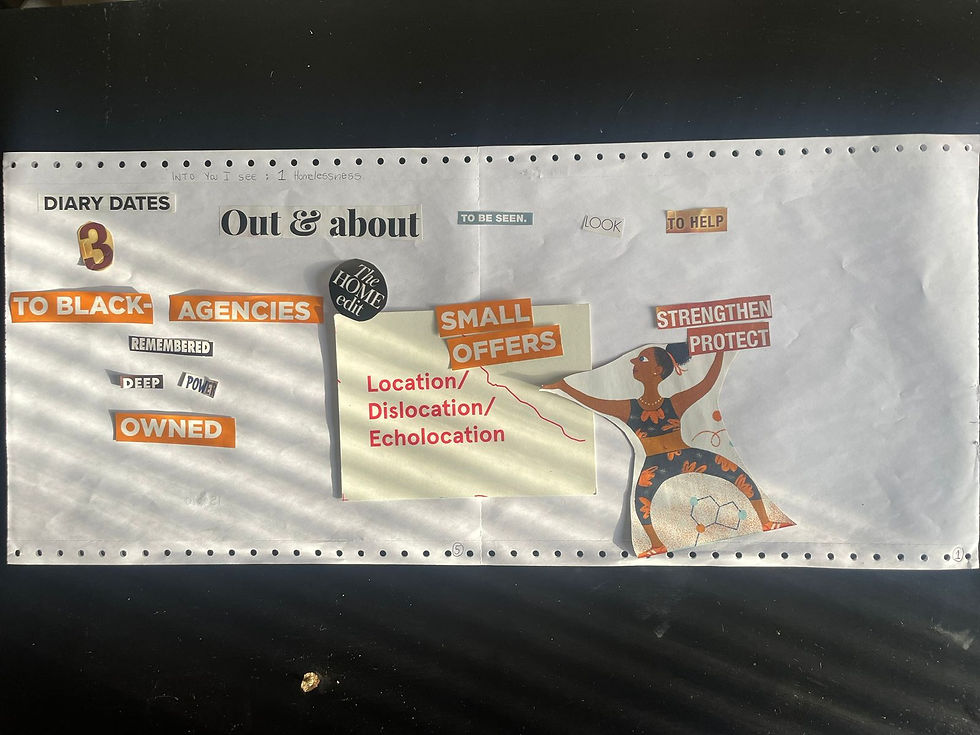
I am telling this story because I lived the economic displacement that COVID-19 exposed. When financial hardship left me without a stable home during lockdown, I moved between cities, townships and rural communities across South Africa, carrying my camera as a way of documenting both survival and my own search for belonging. These journeys became an archive of lives often overlooked people navigating unemployment, grief, informal economies, indigenous healing practices and the quiet resilience that emerged despite political and economic neglect. Returning to Daveyton after the restrictions were lifted forced me to confront the meaning of "home" in a country where race, inequality and historical dispossession continue to shape everyday life. As a photographer and storyteller, I occupy both the position of participant and witness: I experienced displacement while documenting others living through similar realities. A Displaced Home is my way of making visible those whose stories are too often rendered invisible, asking what it means to be displaced within your own country and how communities continue to imagine hope amid enduring economic injustice.

Project definitions
Displaced: Past tense /participle
1. To take over a place, position or role.
2. To move (something) from its proper or usual position.
3. Force (someone) to leave their home, typically because of war, persecution or natural disaster.
Home
Adjective/ adverb / verb
1. Relating to the place where one lives.
2. To or at the place where one lives.
3. of an animal) return by instinct to its territory after leaving it.
Into You I See
I woke up one morning to photograph; I met people with resilience and endurance to continue with pushing themselves to be workers, visible to be helped. In light of this, I saw myself in these dual realities… to start off with; I was unemployed and needed help to fund a project. Documenting on the use of indigenous medicines during the pandemic in exploring remedies for prevention and cure of the Coronavirus. I saw myself, I saw topics of contestation, confessions of hardship, there was also a creativity that spoke to a rebellion of hope, love and a new perspective towards a future not promised. Being Black in the world was a contested playground, I wondered what being Black in South Africa is or was, the importance of my race is contested with the identity of struggle from the Arab slave trade, colonial rule, and suppressed by apartheid as the status quo. I found no ``home” in South Africa. Again, I was displaced in my South African home socially, politically and economically. Corruption, protests of tensions leading to a “dog eat dog” revolution with more people living in adverse poverty and wealth. The oppression of yin and yang, another trace of duality… I see. I saw in communities and individuals the capacity to do more in society. I saw people waiting, wanting a chance to exist. No one saw or sees’ the invisible. I decided that’s what I wanted to show and depict in my images and words the emotive relation in what was displayed in me was displaced in the lives of the people I photographed. Thus, a Displaced Home is a display of what this “home” South Africa is to those who live in it through the lens I see into, for “you” as the reader or viewer to perhaps see these places that are invisible to the eye in South African media a popularity of an unconscious democracy.
What does it mean to be displaced in your home?

Where have you been displaced?
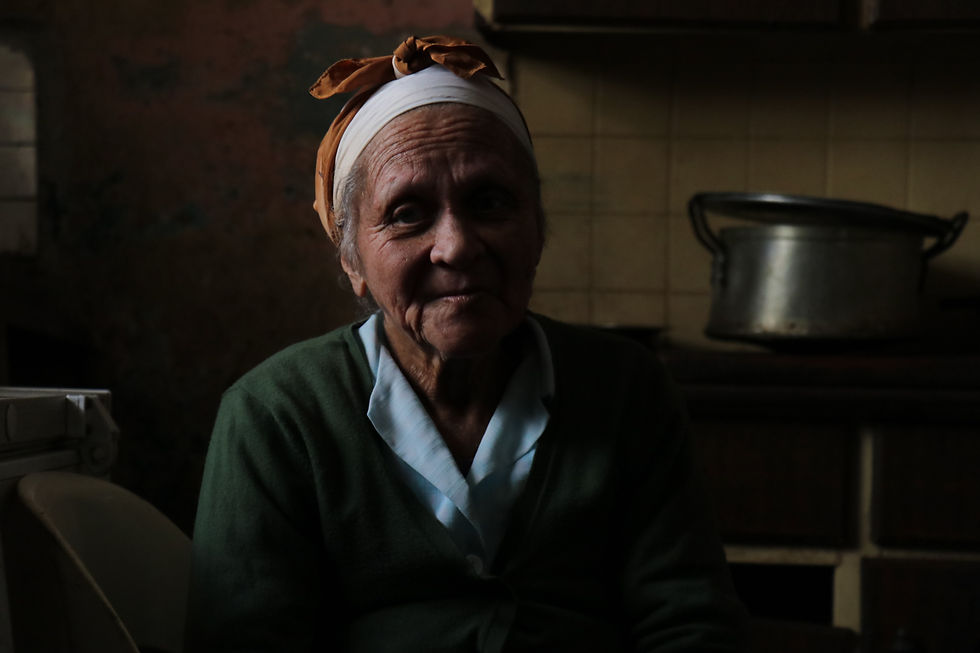

This is the point of reference for the publication, where I can categorize the work from my personal to the public text and how I link them together. A Displaced Home as the first part journey of my personal and project reaching and idea towards Into You I See visual journey and collection of stories from those who have been Displaced or are Displaced.


Comments