Diagram and Notes: Boundless Bound Conversations

Boundless Bound Conversations is an ongoing editorial project developed through Boundless Bound Publishing. The series brings artists and designers into written conversations structured around five questions, artist responses, selected images, an editorial introduction, and a short reflection. Each conversation is published online as an individual feature. As the series grows, these exchanges gradually form an expanding archive of artistic practices, images, perspectives, and cross-cultural experiences.
The project begins with a simple editorial sequence. I invite an artist or designer to participate, send five questions, receive their written responses and selected images, and then develop an introduction and editorial reflection around the exchange. The artist’s language remains central to each conversation. My role as editor is to create a context in which the work can be encountered, situated, and connected with a wider field of practices.
At the time of writing, one conversation in the series has been published. This first exchange provides an initial working example for thinking through the developing structure of Boundless Bound Conversations.
Published conversation: Boundless Bound Conversations with Morong Li
Through Object01 — Intelligence–Love–Revolution, I have begun to examine the editorial processes surrounding the series more closely. The residency gives me a framework for considering interviewing, editing, image selection, publication, readership, and archiving as connected stages within a relational publishing system.
From Interview to Editorial Structure
A written interview begins with an exchange between an interviewer and a participant. In Boundless Bound Conversations, that exchange moves through several additional contexts before and after publication.
The questions establish an initial framework for the discussion. The artist determines how to describe their practice and which images to share. The editor organizes the material, provides contextual framing, and determines how text and images appear together. The publishing platform gives the exchange a visual and temporal form. Readers then encounter the conversation through their own cultural, disciplinary, and personal positions.
Each stage adds another relationship to the project.
This movement has led me to think about relational publishing as a useful way of describing the series. A conversation can function independently while also entering a larger editorial structure. As new conversations are added, recurring questions, differences, tensions, and unexpected connections may emerge between contributors. An individual post can later be revisited, grouped with other conversations, translated, incorporated into an exhibition context, or developed as part of a printed publication.
Publication becomes one stage within a longer process of circulation, interpretation, and accumulation.
Boundless Bound Conversations as a Relational Editorial Network
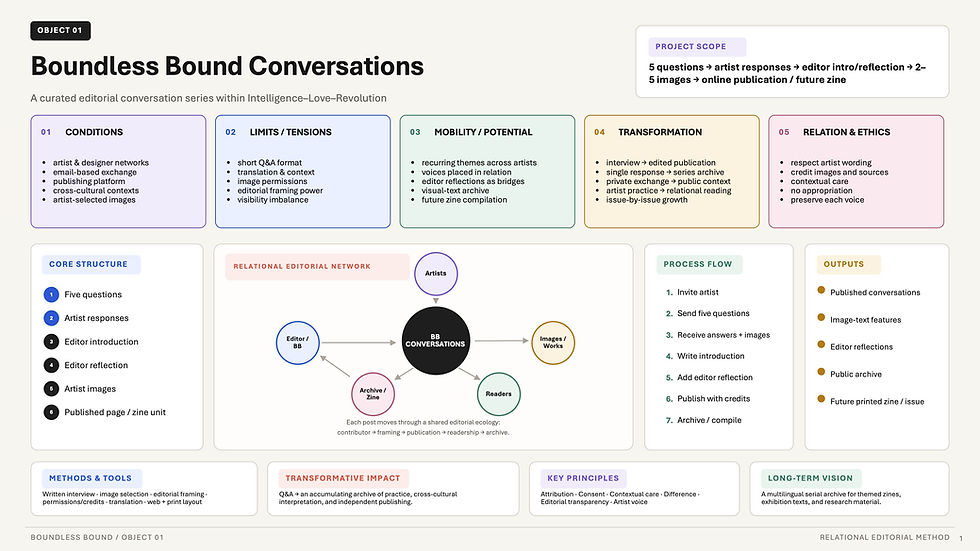
Figure 1. Boundless Bound Conversations as a Relational Editorial Network
The first diagram maps the project as an editorial ecology. At the center is Boundless Bound Conversations, surrounded by several interconnected participants and materials: the artist, the editor or Boundless Bound Publishing, images and works, readers, and the developing archive or future zine.
Each element contributes to the production and interpretation of a conversation.
The artist brings language, practice, references, experiences, and visual materials into the exchange. The editor establishes a structure through questions, introductions, sequencing, and reflection. Images create another way for readers to encounter the artist’s practice and can shape the rhythm and emphasis of the published piece. Readers introduce further interpretations through their own experiences and areas of knowledge.
The archive adds a temporal dimension to this ecology.
As multiple conversations accumulate, each new contribution can change the context surrounding earlier ones. Themes may become visible over time. Differences between practices may gain new significance. A conversation initially published as a self-contained feature can develop new associations when it later appears beside another contribution.
The diagram therefore uses a circular structure. The production of a conversation has a sequence, while its relationships continue to expand after publication.
One way of describing this movement is:
contributor → framing → publication → readership → archive
Each transition changes the context in which the material appears.
A contributor speaks from within their own practice. Editorial framing places their words and images within a particular structure. Publication makes that structure publicly accessible. Readership introduces additional interpretation. Archiving allows the conversation to enter relationships with materials that may appear months or years later.
This process is central to the long-term development of Boundless Bound Conversations. The growing series can create an interconnected publishing environment while preserving the particularity of each contributor and each exchange.
The archive therefore becomes an active editorial space. Its organization, sequencing, and future reuse can generate new readings across material that originally appeared at different moments.
Reading the Project through Object01
The Object01 residency provides a framework for examining this editorial structure through several categories: conditions, limits, potential, transformation, and relations or ethics.
These categories help make visible the processes surrounding a finished publication. They direct attention toward the practical, structural, and ethical decisions that shape the movement from an initial invitation to an archived conversation.
Process, Limits, and Transformation

Figure 2. Boundless Bound Conversations through Object01: Process, Limits, and Transformation
The second diagram begins with the practical workflow of the project:
invite → ask → receive → frame → publish → archive
This sequence describes the basic movement of each conversation. The Object01 framework allows me to examine the conditions and relationships operating within each stage.
Conditions
Boundless Bound Conversations develops through several existing conditions.
One of these is the network surrounding Boundless Bound Publishing. The project is connected to artists, designers, educators, independent publishers, and collaborators working across different locations and cultural contexts. Conversations often emerge from relationships that already exist within this wider network.
The project is also shaped by its email-based format. Participants can respond asynchronously and take time to consider how they want to articulate their practice. This creates a particular rhythm for the exchange. Written responses often arrive as carefully considered units of text, sometimes accompanied by descriptions, links, captions, or visual material.
The asynchronous format also shapes the character of the dialogue. Spoken conversation can move through interruption, hesitation, immediate follow-up, and spontaneous changes of direction. Email produces a different form of temporality, with pauses between questions, responses, editorial work, and publication.
Artist-selected images form another important condition. Contributors decide which works or materials they want to place beside their responses. The visual component participates in the construction of each conversation from an early stage.
My position as editor, designer, and publisher is also part of these conditions. Questions, introductions, visual sequencing, typography, image scale, captions, and editorial reflections all influence how the work becomes visible.
Limits and Editorial Framing
The residency has encouraged me to look closely at the limits embedded within this process.
The five-question format creates a concise and recognizable structure. Every question establishes a boundary around what can enter the conversation. A question about process may encourage one kind of reflection; a question about identity, material, publishing, or audience may open another direction. The architecture of the interview therefore begins before the responses are written.
Translation and cross-cultural interpretation introduce another layer.
Boundless Bound Publishing operates across cultural and linguistic contexts, and many contributors move between languages, geographic locations, and cultural histories. Translation can expand access to a conversation while also producing shifts in tone, ambiguity, rhythm, and culturally specific meanings. These shifts require attention throughout the editorial process.
Visual material raises related questions. Image permissions, attribution, captions, cropping, sequencing, scale, and placement influence how a reader understands an artist’s work.
These decisions become part of the editorial structure alongside the written interview.
Object01 has helped me recognize these limits as structural components of the project. They make editorial transparency particularly important.
The editor occupies a visible position within the process. The framing of the conversation can therefore be acknowledged directly through clear distinctions between artist responses, introductions, reflections, captions, and other contextual material.
From Individual Conversation to Publishing Infrastructure
Accumulation is one of the central aspects of the project.
A contribution begins as a Q&A. Through responses, images, introduction, reflection, and design, it becomes an edited publication unit.
As more conversations appear, those individual units begin to form an archive.
The archive can then support a wider publishing structure.
This development can be described through several movements:
Q&A → edited publication
artist profile → relational archive
single post → growing publishing infrastructure
Placement and relation play an important role in these transformations.
One artist may discuss memory through material practice. Another may approach memory through migration, technology, language, family history, or digital culture. Their conversations can acquire new resonance when they become part of the same archive. Similarity is one possible relationship among many. Contradiction, distance, overlap, interruption, and difference can also create productive connections.
This is important for the editorial direction of Boundless Bound Conversations. The series can develop shared threads while allowing each contributor to retain the specificity of their practice.
Editorial reflections may provide bridges between conversations. These bridges can identify recurring concerns, contextual relationships, or questions that emerge across the archive. Their role remains distinct from the artist’s own statements.
Relation, Attribution, and Care
The relational structure of the project also has an ethical dimension.
Publishing creates connections between people, words, images, platforms, and future contexts. Each of these connections involves forms of responsibility.
Several principles are becoming central to Boundless Bound Conversations.
Artist responses remain intact unless edits are discussed and approved. Images and projects are clearly credited. Permissions for publication and possible future reuse need to remain clear. The artist’s words and my editorial introduction or reflection occupy visibly distinct positions.
The distinction between artist voice and editorial voice is especially important.
As an editor, I make interpretive decisions throughout the process. The questions I ask, the passages I emphasize, the order of materials, and the relationships I identify all emerge from my own position. Making this framing legible allows the editorial structure to remain visible to the reader.
The growing archive also raises questions about thematic organization.
As more conversations appear, patterns will become easier to identify. These patterns may provide useful ways of organizing future zines, exhibitions, or research. At the same time, each contribution brings its own conditions, references, and complexities.
A question I am carrying forward is:
How can editorial framing create relationships between different voices while preserving the specificity and partiality of each one?
I see this as an ongoing editorial question that can develop alongside the archive.
What the Residency Changes
Boundless Bound Conversations was already in development when I entered the Object01 residency. The residency gives me a space to examine its structure while the series is still at an early stage.
My initial workflow focused heavily on production: inviting a contributor, preparing questions, receiving responses, collecting images, writing an introduction, publishing the conversation, and preparing for the next exchange.
Object01 has expanded my attention toward the relationships operating inside that workflow.
I am now asking questions such as:
What conditions make each exchange possible?
Where does editorial authority enter the process?
What changes when a private email exchange becomes a public publication?
How does an individual contribution enter a developing archive?
How can a publishing structure create connections between contributors who may never directly encounter one another?
What responsibilities emerge when words and images continue circulating through new contexts?
The two diagrams function as working tools for exploring these questions.
Diagramming makes visible relationships that can easily disappear inside routine editorial practice. It also highlights the extended life of a published conversation. A post can later be translated, recontextualized, printed, exhibited, referenced in research, or placed beside another artist’s work. Each movement creates a new context for the original material.
One of the most useful developments during the residency has been this expanded understanding of editorial practice as the design of relationships across time.
Questions, responses, images, publication, readership, and archiving become parts of the same evolving system.
Moving Forward
Boundless Bound Conversations is still developing. At the time of this preliminary analysis, one conversation has been publicly released and additional conversations are in progress. The larger relational structure mapped in these diagrams will continue to change as the archive grows.
This early stage gives me an opportunity to consider the architecture of the project while it is forming.
As additional conversations are published, I want to observe how relationships emerge across them. Recurring themes may become visible through repeated questions, materials, cultural experiences, or approaches to artistic practice. Editorial reflections can help trace these relationships while maintaining clear distinctions among contributors.
I also want to explore the development of the online series into a multilingual and serial archive. Selected conversations could eventually be reorganized into themed zines, exhibition-related publications, or other forms of independent publishing.
The future zine is especially important to this direction. Moving material from individual online posts into print would introduce another editorial stage. Conversations would need to be resequenced, placed beside one another, and reconsidered through page order, physical scale, typography, image relationships, and the material structure of the publication.
The printed form could therefore generate a new set of relationships within the archive.
For now, these diagrams operate as preliminary maps. They allow me to examine a practice that has largely developed through repeated acts of inviting, asking, editing, designing, publishing, and connecting.
Boundless Bound Conversations begins with five written questions, yet its wider structure grows through many relationships: between artist and editor, response and framing, text and image, individual contribution and collective archive, publication and readership, and present exchange and future reuse.
I am increasingly interested in the space where an individual conversation enters this larger structure.
Publication becomes a temporary position within an evolving network. Each new conversation can add another connection, introduce another difference, and gradually reshape the context of the archive as a whole.


Comments